


Left: John Turturro as Pino and filmmaker Spike Lee as Mookie in Mr. Lee's 1989 landmark film "Do The Right Thing". Right: "American Violet", released last month, stars Alfre Woodard and Nicole Beharie and is based on the true story of Regina Kelly. Hollywood films in 2009 have generally shown many more positive images of blacks since Mr. Lee's groundbreaking 1989 film on racism and race relations, which has its 20th anniversary on June 30. (Photos: Universal Home Entertainment; Samuel Goldwyn)
MOVIE MEMORY LANE: THEN AND NOW
With "Do The Right Thing" Celebrating Its 20-Year Anniversary This Month, Films Featuring Popular Black Figures And Themes Have A Positive Lift In 2009
"Notorious", "Medicine For Melancholy", "The Soloist", "American Violet" and "Tyson" are among the films in 2009 bringing a positive perspective to the big screen for black characters or black-themed stories
By Omar P.L. Moore/PopcornReel.com SHARE
Wednesday, June 17, 2009
When "Do The Right Thing", Spike Lee's landmark film on racism and race relations, burst on to the national stage in its theatrical release debut in the U.S. on June 30, 1989, there were two things that Americans did not expect would happen: that the film would go on to become the most-talked about film that summer and gross more than $27 million, earning two Academy Award nominations, and that there would be a black man as the President of the United States just 20 years later. Both happened -- the latter of course far more significant than the former -- but a contributing factor in both was Mr. Lee, last year seen boldly prognosticating then-U.S. Senator Barack Obama's relatively comfortable November 2008 election triumph, campaigning vigorously for Mr. Obama across parts of the American South, and delivering a film in the heat of a summer that would turn America into a hotbed of vigorous debate about race and understanding, polarization and perception, violence and justice. Those debates roiled the atmosphere at water coolers throughout the American workplace in 1989 -- a precursor of the raging debate between the races that would burn a fiery hole through America's fragile racial fabric in 1994 and 1995 with the arrest and subsequent criminal trial acquittal of O.J. Simpson for the murders of Nicole Brown Simpson and Ron Goldman.
"Do The Right Thing" was responsible for more spilled ink (at least three New York Times stories emerged during the weekend of the film's release) and curse words (over 400 in the film) than any other film released in America in 1989, holding that title with distinction until "Goodfellas" came along the following year with a fusillade of swear words. "DTRT" as it was colloquially known, made inroads at a time when people were still trying to get to know who Spike Lee was -- some thought that his last name meant he was Asian. The film cost just $6.5 million to produce and was released two years ahead of the booming group of films that could have been hailed the New Black Wave. In 1991 there were, among no less than 19 others, "Boyz N The Hood", "The Five Heartbeats", "Strictly Business", "Straight Out Of Brooklyn" and "Jungle Fever", all of which told very different stories, with mixed commercial success. Of these five, "Boyz N The Hood" was the most successful, with almost $60 million in the U.S. and Canada and an Oscar nomination for best director. Of the five respective filmmakers responsible for the films referenced, John Singleton still directs as does Robert Townsend (most recently "Why We Laugh"), with Kevin Hooks (last film "Passenger 57") and Matty Rich not being heard from in a very long time. Only Spike Lee remains firmly established not only as the most prominent African-American filmmaker in the country but as one of America's top four or five directors, an important filmmaking voice on the world stage. Mr. Lee's most recent feature "Miracle At St. Anna", received tepid commercial success and mixed reaction from film critics. This year the Atlanta-born, New York-raised filmmaker has orchestrated two documentaries: "Kobe Doin' Work" and "Passing Strange".
In the 20 years since DTRT, the Hughes Brothers ("Menace II Society", "From Hell") have made their mark as has Tyler Perry, who has become the most commercially bankable filmmaker of all those mentioned here. Darnell Martin, who worked on the set of Mr. Lee's DTRT has become a solid filmmaker in her own right, directing last year's "Cadillac Records", a film that proved to be as rich in its performances as in its message, with solid work from both Beyonce Knowles and Jeffrey Wright. At a ceremony honoring Mr. Lee last year, those saluting him including his "Right Thing" co-star Rosie Perez, hailed him for influencing and launching the careers of so many cinematic talents black and white alike. Laurence Fishburne and Denzel Washington also praised Mr. Lee for his courage, skill and generosity. Where careers are concerned, Mr. Lee gave Miss Perez (an Oscar nominee) her start on the big screen, as well as Martin Lawrence (both in DTRT), Halle Berry (Oscar winner) her debut on film in "Jungle Fever", and helped augment the careers of John Turturro (who has been in more Spike Lee joints than any other actor), Michael Rispoli, Debi Mazar, Al Palagonia, Rosario Dawson, Isiah Whitlock, Nicholas Turturro, Wesley Snipes, Danny Aiello (Oscar nominee for DTRT), Roger Guenveur Smith, Lonette McKee, Jim Brown, Theresa Randle, Chiwetel Ejiofor, Delroy Lindo, Mekhi Phifer, Samuel L. Jackson, Thomas Jefferson Byrd, Ossie Davis, Ruby Dee, Kerry Washington, Phyllis Yvonne Stickney, Michael Imperioli, Isaiah Washington, Savion Glover, Rick Aiello, Miguel Sandoval and John Leguizamo, to name just a few.


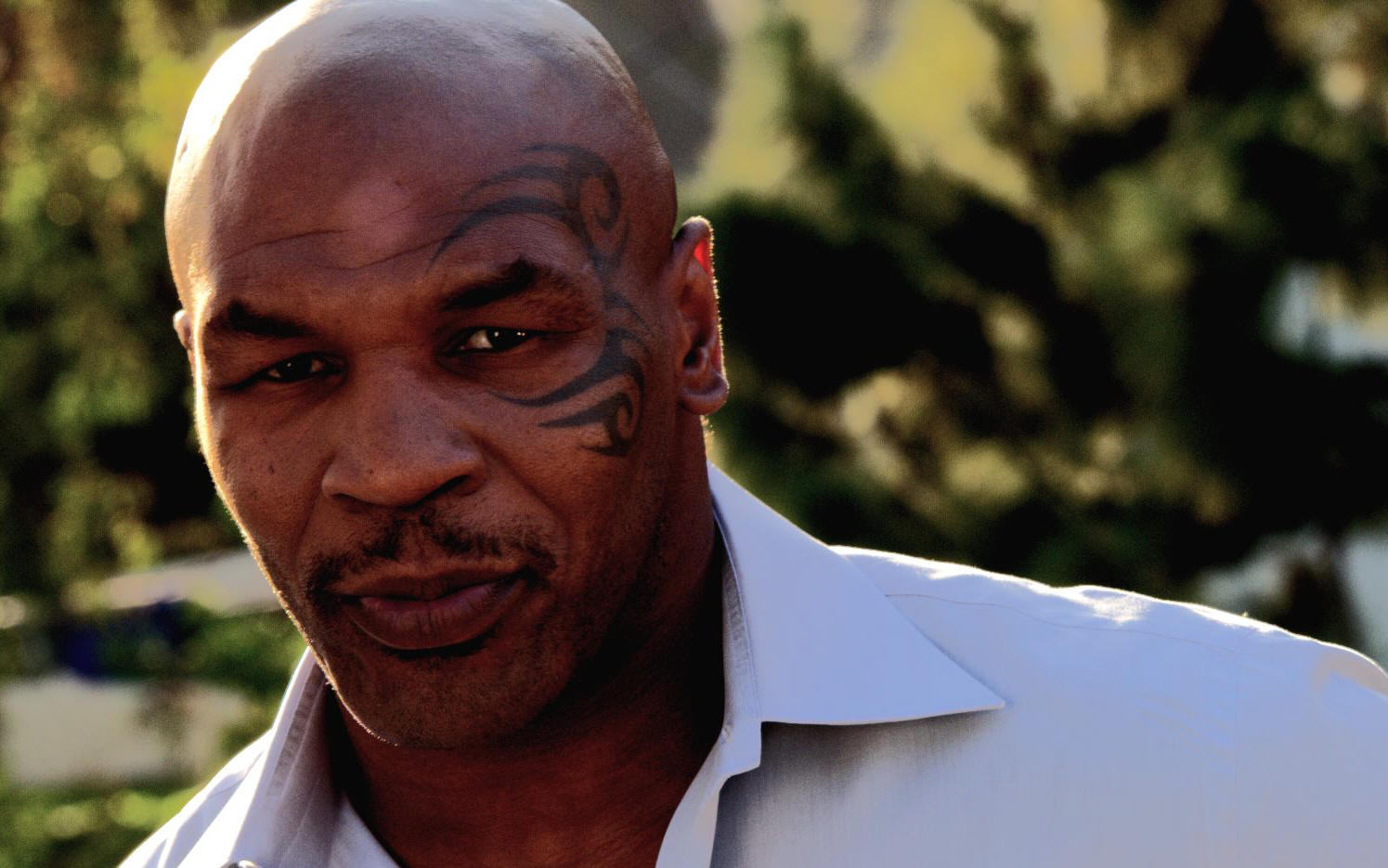
Left: Jamie Foxx as Nathaniel Ayers in "The Soloist". Middle: Filmmaker Tim Disney and his "American Violet" real-life subject Regina Kelly. Right: Mike Tyson in James Toback's documentary "Tyson": Figures of reality, restoration and unvarnished introspection in 2009 mean better portrayals of black characters in both American independent and mainstream films -- at least for the most part. (Photos: Paramount Pictures; Omar P.L. Moore; Sony Pictures Classics)
As far as films go in 2009, positive images of black people appear to be on the uptick. Interestingly, Mr. Lee came in for strong criticism in some quarters for supposedly portraying negative black characters in "Right Thing". Today, where positive big screen portrayals are concerned, for every "Norbit" or "Dance Flick" there's a "Medicine For Melancholy" or an "American Violet". Both of the latter films burst onto the national stage in 2009, and while small, made an impact with audiences. "Medicine", Barry Jenkins' compelling story of black life in San Francisco, a city whose black population has dwindled rapidly since the 1950s to the point where it is now barely six or seven percent of the total of about 800,000 people, was a hit at last year's San Francisco International Film Festival where it won the Audience Award. In the film, Wyatt Cenac and Tracey Heggins (both relatively new big screen actors) retrace steps from a hazy one-night stand to form a loving if temporary bond. Mr. Jenkins brought a naturalism, richness and depth to a film that was frank and intimate. "American Violet" told the true story of Regina Kelly, a single mother of four who had been wrongly accused of drug possession and sales in a Texas town. Tim Disney's film captured the warmth and bravery of Miss Kelly, who was portrayed in the film by Nicole Beharie, an actress making her lead role debut in a feature film. Mr. Disney lined the powerful "Violet" with effective actors, including Charles S. Dutton, Anthony Mackie and Alfre Woodard, all of whom Mr. Lee has positioned in his films.
Mr. Lee may not have direct input nor be given credit for these films in the intervening two decades since his "Do The Right Thing", which he says during an new audio commentary on the film's forthcoming 20th anniversary DVD edition was the first film where he felt confident as a director, but there's no accident that his consistency, fluctuating successes and persistence with landmark films like "Right Thing", "Malcolm X" and his first smash hit, "Inside Man", have had their affect on what is being brought to the big screen today where films on black-themed stories or figures are concerned. In particular, three other true-life stories have hit the big screen in 2009: "Notorious", "The Soloist" and the documentary "Tyson". Each are as similar as they are different. In some ways "Notorious" and "Tyson" are virtual mirror images, telling the stories of the real-life icons who fell hard at a young age, with Christopher "Biggie Smalls" Wallace not getting past age 26 after being murdered in Las Vegas. The rap icon is portrayed lovingly in "Notorious", the George Tillman Jr. film which also starred Anthony Mackie, Derek Luke, Angela Bassett and introduced Jamal Woolard. In "Tyson", James Toback's revealing documentary, former undisputed heavyweight boxing title holder Mike Tyson remains alive and well of course, but his past as he tells it during Mr. Toback's film plays like a horror film -- and it is virtually dead to him. Here, there is a resurrection in process, and it is riveting to watch. (As is Mr. Lee's "Kobe Doin' Work" on Mr. Bryant's basketball I.Q.) Watching "Tyson" is literally like being on stage on Broadway watching a bull (Mr. Tyson) wrestle with a matador (Mr. Tyson). Troubled, flawed, fearful and vulnerable, Mike Tyson humanizes himself and where black imagery in American film and media is concerned, that's hardly a negative thing.
"The Soloist" meanwhile, performs no such correctives. Joe Wright's film tells the true tale of Nathaniel A. Ayers, a man stumbling through the dark and the light with schizophrenia. A once-superb and classically trained Juilliard student, Mr. Ayers played the cello before the mind took over in a negative or at least unfortunate way -- via mental illness. Mr. Ayers remains homeless on Los Angeles Skid Row today, and Jamie Foxx digs beneath the surface to paint a resonant portrait of the man. Although the story is seen largely through the eyes of L.A. Times columnist Steve Lopez (the film is actually based on Mr. Lopez' book and columns), Mr. Foxx's Ayers steers his own rudder while Robert Downey Jr. (as Mr. Lopez) reacts and processes. "The Soloist", which underperformed at the box office in North America in April, does exalt in showing the forgotten (homeless and mentally ill) on their own terms, giving them a righteousness and humanity not often seen in Hollywood films. Ultimately "The Soloist" is hopeful if not happy, and Mr. Foxx's work as Ayers is sometimes explosive and other times contained, achieving a difficult balancing act for a character that has often been depicted in a clichéd fashion on Tinseltown celluloid.
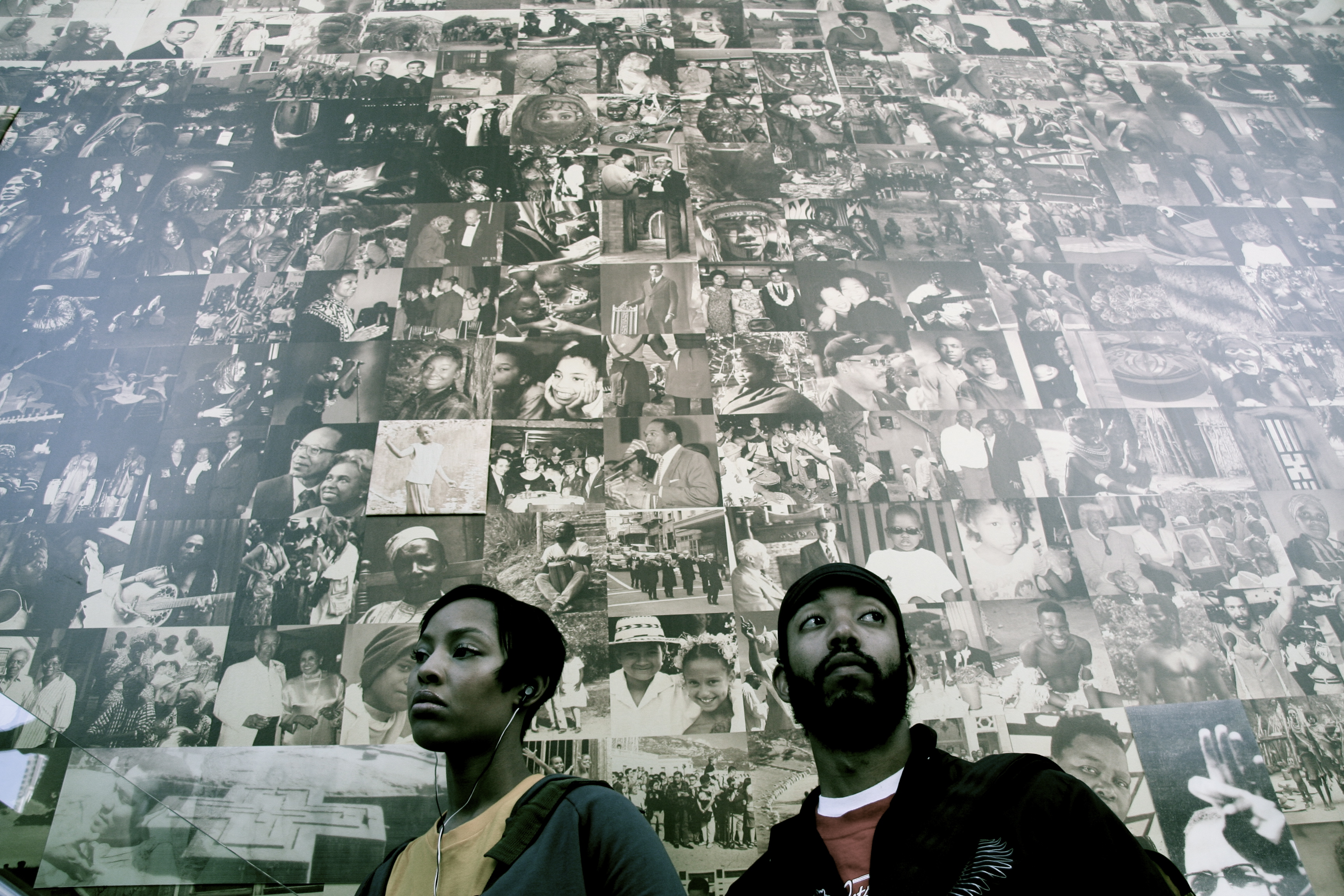
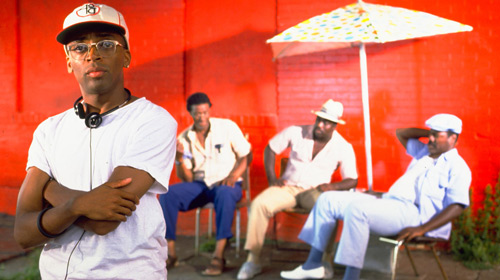

Left: Tracey Heggins and Wyatt Cenac in Barry Jenkins' "Medicine For Melancholy": Spike Lee in 1988 on the set of "Do The Right Thing" in Bedford-Stuyvesant, Brooklyn; Morris Chestnut and Taraji P. Henson in "Not Easily Broken", set in Los Angeles. (Photos: IFC Films; Universal Home Entertainment; Sony Pictures/Screen Gems)
Thus far at this near-midpoint of 2009 Tyler Perry has had a number one hit film in "Madea Goes To Jail", and has several more films already in the works; Bill Duke, who directed powerful films like "Deep Cover" and "Cover", had realistic not caricatured characters in "Not Easily Broken" last January despite weak story structure. There's been the effective box-office punch of "Obsessed" (Beyonce Knowles and Idris Elba) even if the film itself was relentlessly flawed; "Imagine That", a cute, family loving treat of a film starring Eddie Murphy, revitalized in his best comedy effort in years, never got off the ground but made those who did see it laugh loud and long. In the wake of Mr. Lee's stunning 1989 film, black-themed stories and characters are making a more regular visit to the big screen. There's lots more work to be done, and films like "Dance Flick" will always have their place whether liked or unwelcome (Mr. Lee's "Bamboozled" has a lot to say about the kind of behavior evoked in "Flick"). Later in the year, November or December, will herald Walt Disney's bold (if long overdue) undertaking: finally after 75 years, bringing to the screen the story of a black princess in the classic "The Princess And The Frog". It will be interesting to see how the box office on that film fares in the U.S. and Europe.
Through all the upcoming films on black subjects, Spike Lee remains steady and among most moviegoers it can safely be said that "Do The Right Thing" is foremost in the director's portfolio. As prolific and accomplished as he's been, Mr. Lee hasn't always got what he has wanted over the years -- film projects on such American icons as Joe Louis, Jackie Robinson and James Brown have fallen through, as did a film on the violent unrest following the 1992 criminal trial verdict acquitting four L.A. police officers of the March 1991 videotaped beating of Rodney King in Southern California. As he continues to soldier on with over 25 feature films and documentaries under his belt since 1986, film portrayals of black characters and true-life figures overall appear to get better, even if there's still plenty of room for improvement.
Copyright The Popcorn Reel. PopcornReel.com. 2009. All Rights Reserved. SHARE